
The Heat Index, or apparent temperature, represents how hot it feels to the human body when air temperature and relative humidity are combined.



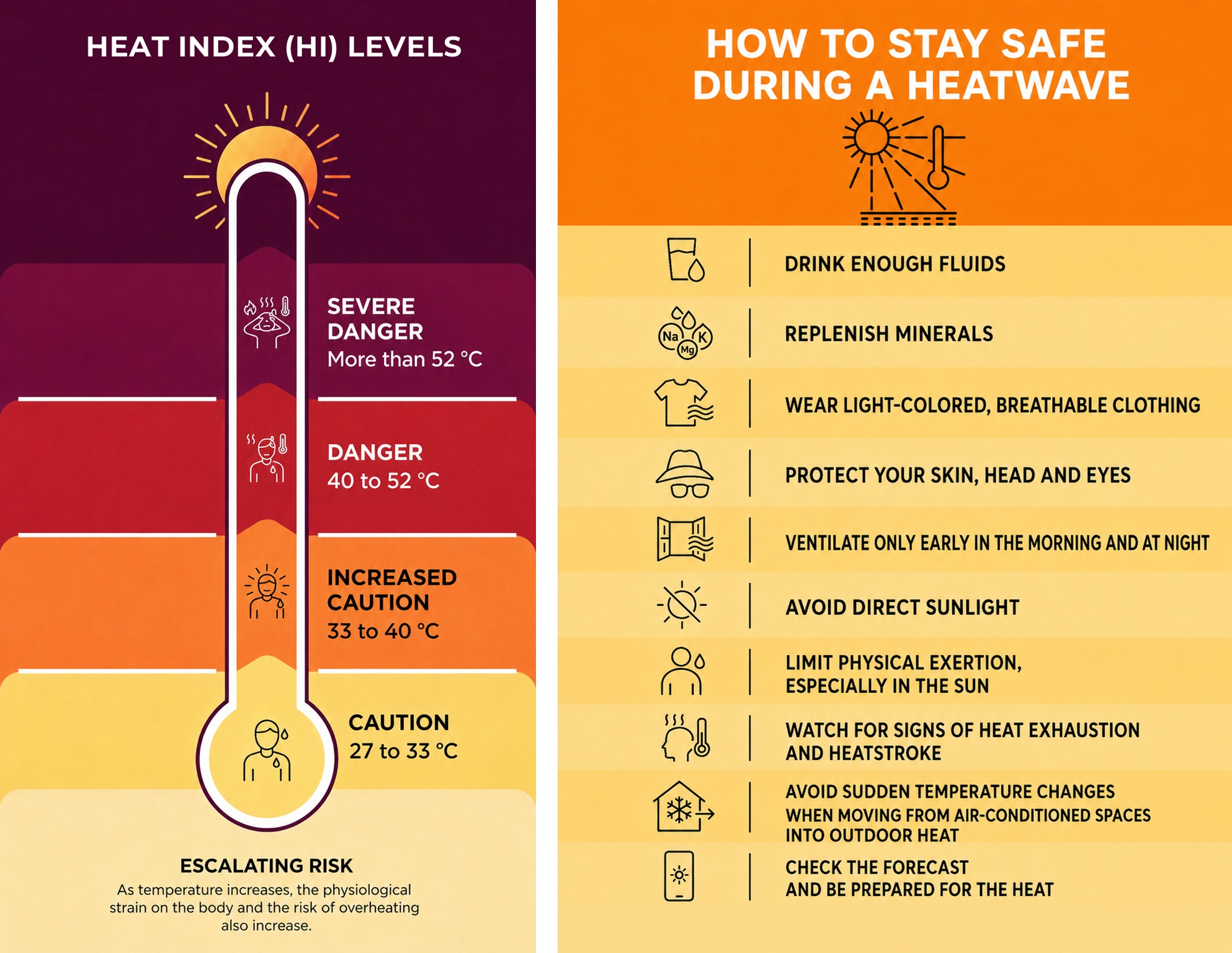
This is crucial for understanding human body’s comfort levels. When the body overheats, it sweats to cool down. However, if sweat can't evaporate, the body struggles to regulate its temperature. Evaporation is a cooling process, and as sweat evaporates, it helps reduce body temperature. High relative humidity slows down this evaporation, making the body feel warmer. Conversely, low humidity speeds up evaporation, making the body feel cooler. There is a direct relationship between air temperature, relative humidity, and the heat index: as air temperature and relative humidity rise, so does the heat index, and vice versa. Heat Index of over 39 °C or higher can lead to dangerous heat disorders, such as heat cramps or heat stroke, with prolonged exposure and/or physical activity in the heat. The temperature and relative air humidity are derived from the ECMWF’s IFS weather forecast model.
Select a country on the map to view its monitoring and forecasting systems.


